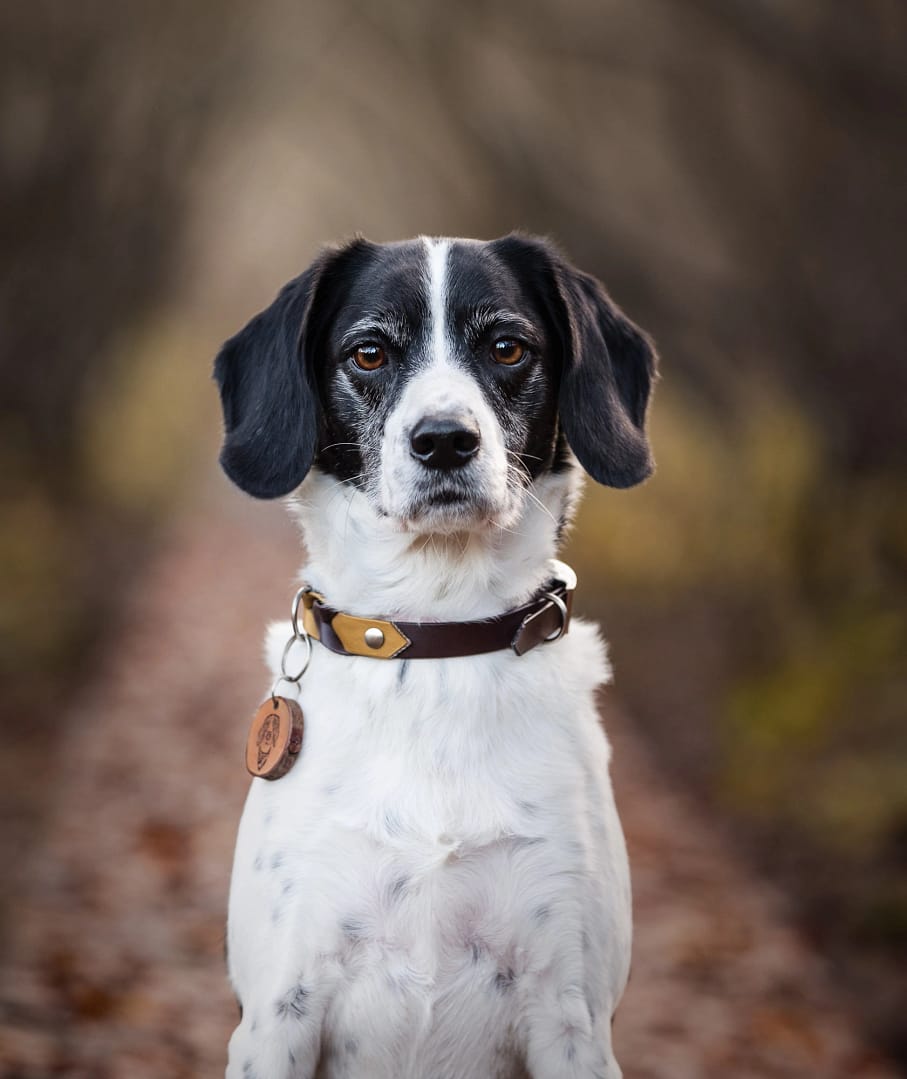

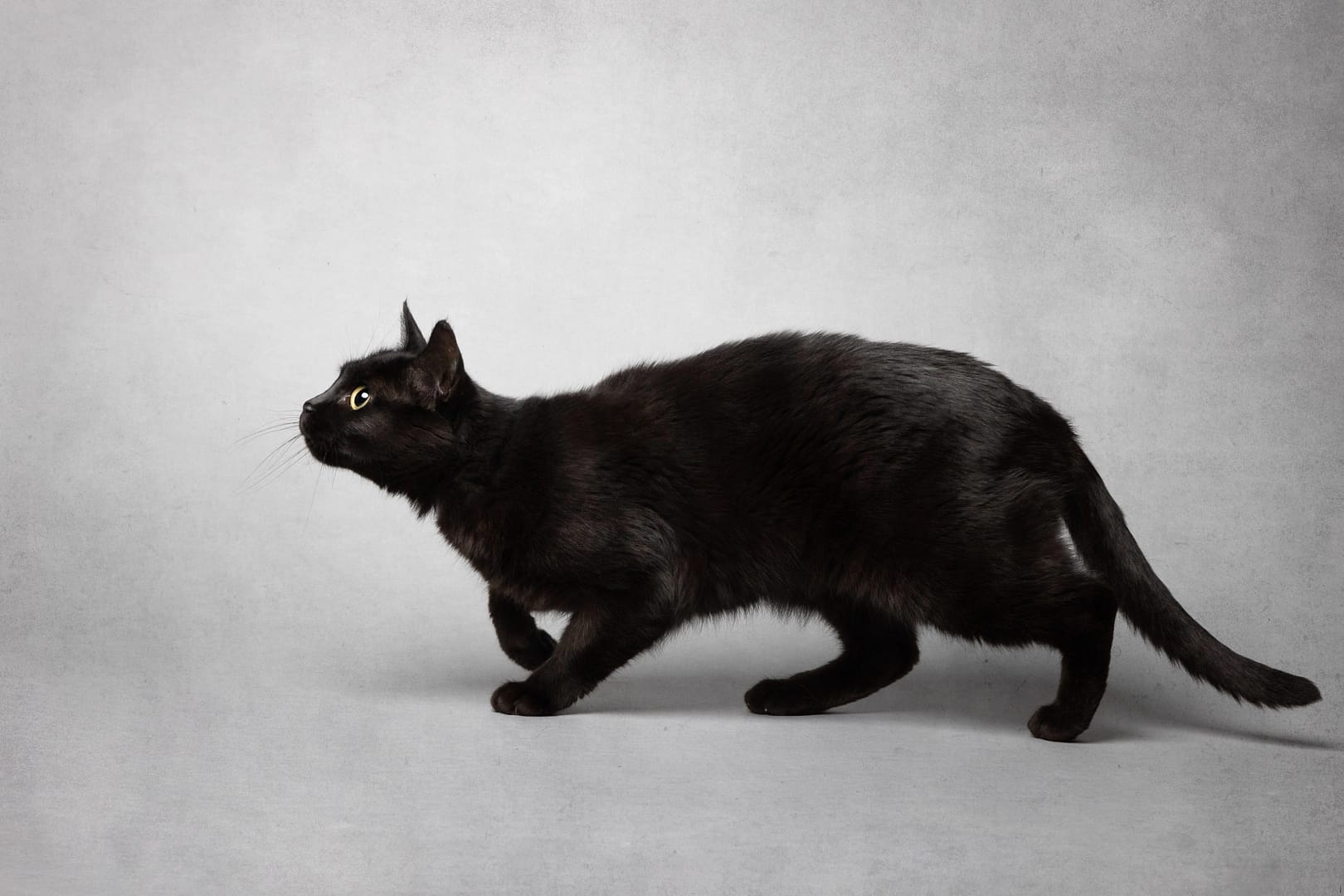
I’ve lost count of how many times someone has shown me a photo of their black dog or cat that looks like… well, a black blob with eyes. Sometimes not even eyes. Just a shadow shaped vaguely like an animal.
If you’re a pet owner trying to capture your dark-furred friend on camera, you already know the frustration. Your black Lab or tuxedo cat is gorgeous in person, but every photo makes them look like they’re hiding in witness protection. No details in the fur. No texture. Just darkness.
Here’s the thing: photographing black dogs and cats isn’t harder. It’s just different. And once you understand what’s actually happening with light and dark fur, getting those beautiful, detailed shots becomes way easier than you think.
I’ve spent years as a pet photographer in San Diego working with black pets, and I’m going to walk you through exactly what works (and what doesn’t).
Why Black Fur Is So Tricky
Your camera is basically trying to make everything it sees into middle gray. That’s how exposure works. When your camera looks at a scene, it averages everything out and aims for that medium tone.
So when you point your camera at a black dog or cat, your camera goes “oh, this is too dark, let me brighten it up” and suddenly your black pet looks washed out and gray instead of rich and dark. Or the opposite happens: your camera sees all that darkness and underexposes everything, and now you’ve got a silhouette instead of a portrait.
Black fur also absorbs light instead of reflecting it, which means there’s less information for your camera to grab onto. Less texture, less detail, less contrast. Your autofocus struggles because it needs contrast to work properly. Your exposure meter gets confused. Everything just gets harder.
But you can absolutely work around all of this.
Step One: Stop Using Direct Sunlight
This might sound backwards, but bright direct sunlight is actually your enemy when photographing black pets.
When the sun is directly overhead (like midday), you get harsh shadows and extreme contrast. Your black dog or cat becomes even darker in comparison to the bright background, and your camera can’t handle both at once. You end up with a photo where either your pet is too dark or the background is completely blown out.
Here’s what to do instead: find bright, even shade.
Think about it like this. When you’re under a tree or next to a building that blocks direct sun, you still have plenty of light bouncing around. That light is just softer and more even. Open shade gives you beautiful, diffused lighting that shows off all the details in black fur without creating harsh contrasts.
The best times for outdoor pet photography in San Diego? Early morning or late afternoon when the light is lower and softer. Golden hour is magical for black pets because the warm light brings out richness in their coat that you don’t see in harsh midday sun.
If you’re stuck shooting midday, find an area with consistent shade. Just make sure your background is also shaded. If your dog is in shade but standing in front of a brightly lit lawn, your camera is still going to struggle with the exposure.
Step Two: Light Their Face
This is probably the single most important thing you can do when photographing a black dog or cat.
If their face is pointing toward a light source, you get detail in their features. Their eyes light up with catchlights (those little reflections that make eyes look alive). The texture of their fur becomes visible instead of looking like a flat black surface.
Here’s how to make this happen:
Position them facing light. If you’re outside, have your pet face the open sky or the direction of softer light. Not staring into the sun (that’s uncomfortable for them and creates squinting), but angled so light hits their face.
Watch for catchlights. Look at your pet’s eyes. Do you see little reflections of light? Those catchlights are what make eyes look expressive and alive. If you don’t see them, move your position or your pet’s position until you do.
For indoor photography, put your pet near a window. Not right in the direct beam of sunlight coming through, but close enough that bright, soft light illuminates their face. North-facing windows are perfect because they provide consistent, diffused light all day.
Step Three: Pick the Right Background
Contrast is your best friend when photographing black pets.
Your black dog or cat needs to stand out from the background, which means you want lighter or mid-tone backgrounds. Green grass works beautifully. Sandy beaches are fantastic. Light-colored walls, sky, painted fences… anything that creates separation between your dark pet and the space around them.
In San Diego, we’re lucky to have gorgeous natural backgrounds everywhere. The beach at sunset with wet sand reflecting light? Perfect. Balboa Park with its lighter pathways? Great. Even urban settings with concrete or light-colored buildings can work really well.
What you want to avoid: dark backgrounds. If you photograph your black cat on a dark couch or your black dog in front of dark bushes, they’re going to blend in and lose definition. The eye needs that contrast to see where your pet ends and the background begins.
Another tip: textured backgrounds add visual interest. Brick walls, weathered wood, grass with variation in color… these give your eye something to latch onto while still letting your pet be the star.
Step Four: Take Control of Your Exposure
This is where a lot of people get stuck because their camera’s automatic settings aren’t doing them any favors.
When you shoot in full auto mode, your camera looks at all that black fur and makes decisions based on what it thinks you want. Usually, it gets it wrong. Your black pet either looks gray (camera brightened them too much) or they disappear into darkness (camera underexposed).
You need to override this.
If you’re using a phone: Tap on your pet’s face to set focus and exposure on them specifically, not on the brighter background. Most phones will let you slide your finger up or down to adjust the exposure after you tap. Try increasing the exposure a bit to bring out more detail in the dark fur.
If you’re using a camera: Learn to use exposure compensation. This is usually marked with a +/- button. For black pets, you’ll often need to increase exposure by about +1 to +2 stops to get their fur to show detail instead of going completely black. Yes, this might make your background a bit brighter, but your pet is what matters.
The goal isn’t to make your black dog look gray. The goal is to keep them black while revealing the texture and detail in their coat.
Step Five: Get Those Eyes in Focus

Sharp eyes make or break any pet photo, but it’s especially critical with black dogs and cats because their eyes are often the brightest, most detailed part of the image.
Your camera’s autofocus might struggle with black fur because there’s not much contrast for it to grab. Here’s what helps:
Focus on the eyes, not the body. If you’re shooting with a camera, use a single focus point and place it right on your pet’s eye. If you’re using a phone, tap directly on their eye to lock focus there.
Make sure there’s enough light on their face (see step two) because that gives your autofocus more information to work with.
If your camera has a continuous autofocus mode (also called AF-C or AI Servo), use it. Black pets move, and continuous autofocus tracks them so they stay sharp even when they shift position.
Some newer cameras and phones have pet detection modes that automatically find and focus on animal eyes. If you have this feature, use it. It’s specifically designed to solve this exact problem.
Step Six: Consider Your Angle
Where you position yourself relative to your black pet changes everything about how the light hits them.
Get on their level. Sometimes you want that eye-to-eye connection. When you do this with a black pet, make extra sure there’s good light on their face, because shooting from their height can sometimes put you in positions where their face is shadowed.
Move around. Don’t just take one photo from one spot and call it done. Walk a few steps to the left or right. Try different heights. You might move just slightly and suddenly the light catches their coat in a completely different way.
Black fur can look almost blue-black in certain light, or have rich brown tones in warmer light. Moving your position changes how that light interacts with their coat.
Step Seven: Use Reflectors (If You Want To Get Fancy)
Professional pet photographers often use reflectors, and they’re honestly not that complicated.
A reflector is just a collapsible disc (usually white or silver on one side, sometimes gold) that bounces light back onto your subject. You can get them cheap online, or you can DIY with a piece of white poster board.
Here’s how this helps with black pets: even if you’re in nice open shade, a reflector can bounce more light onto their face and chest, filling in any remaining shadows and really making those details pop.
Have someone hold the reflector (or prop it up) opposite your main light source, angled to bounce light back toward your pet’s face. You’ll see the difference immediately. More light, more detail, more dimension in that black fur.
Is this necessary? No. Will it make your photos better? Absolutely.
Check out one of my favorite budget friendly reflectors.
Step Eight: Don’t Be Afraid to Edit
Even with perfect technique, black pet photography usually benefits from a little editing.
Here’s what I typically adjust:
Shadows and blacks. I’ll brighten the shadows slightly to reveal more detail in the fur, but I’m careful not to go so far that the black looks muddy or gray.
Highlights on the eyes. A subtle boost to the catchlights makes eyes sparkle.
Clarity or texture. Adding a bit of this brings out the texture in the coat without making the image look over-processed.
Exposure. Sometimes I’ll increase the overall exposure just a touch to lift the whole image, then bring the blacks back down so they’re still rich and dark.
The goal with editing black pets is subtlety. You want to enhance what’s already there, not transform your black dog into a gray one or your black cat into a fuzzy blob of contrast.
Most phone editing apps (even the built-in ones) have sliders for these adjustments. Play around and see what looks good to your eye.
What About Indoor Photography?
Everything I’ve talked about applies indoors too, with a few extra considerations.
Windows are your friend. Position your pet near a large window for the best natural light. Have them face the window so light illuminates their features.
Avoid overhead lighting. Ceiling lights create harsh shadows and don’t do black pets any favors. They cast shadows down into your pet’s face, hiding details instead of revealing them.
Turn on extra lamps. If your natural light isn’t enough, add more light sources around the room. Floor lamps, table lamps, anything that adds softer, diffused light works better than one harsh overhead bulb.
Watch your background. Indoor backgrounds can be cluttered. Move toys, blankets, and random stuff out of frame. A clean background (even just a light-colored wall) makes your black pet stand out better.
If you’re serious about indoor pet photography, you could invest in a softbox or continuous LED light. But honestly, good window light works for 90% of situations.
Why This Matters More Than You Think
Black dogs and cats statistically spend longer in shelters because they’re harder to photograph well. People scroll past their adoption photos because the images don’t do them justice. That’s heartbreaking.
But even if you’re not photographing shelter pets, your black dog or cat deserves photos that actually capture how gorgeous they are. They deserve images that show off the glossiness of their coat, the expressiveness in their eyes, the personality that makes them special.
And here’s something else: these skills translate to better pet photography overall. Once you understand how to handle difficult lighting situations and exposure challenges with black pets, photographing lighter-colored pets becomes even easier.
Looking for professional pet photography in San Diego for your black dog or cat? I specialize in capturing the beauty and detail in dark-coated pets through expert lighting and technique. From wall art to albums to prints, every piece comes with a lifelong guarantee. Visit katdelaetphoto.com to see my work and book your session.